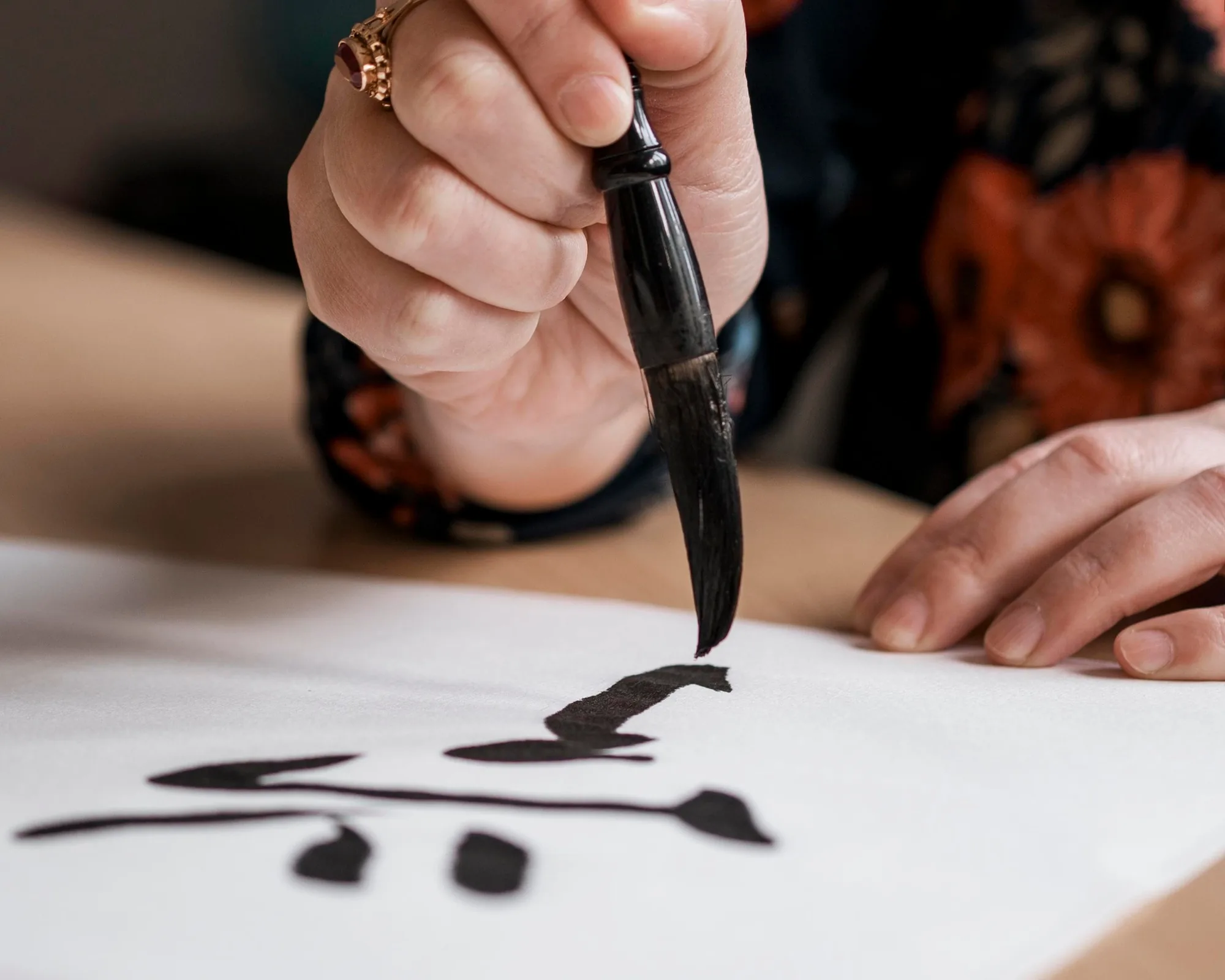
Spend a slow morning among words that have lasted centuries
An unhurried half-day moving through classical Japanese poetry and literature — readings, quiet conversation, and a short writing exercise in a small group in Kyoto.
A morning with the breadth of classical Japanese literature — and room to stay with each part of it
By the end of this session you will have moved through several of the major forms of classical Japanese verse and prose — haiku, tanka, and the literary culture that held them together. You will have read, discussed, written briefly, and listened. The closing reflective reading is chosen to leave you with something to carry.
You will also leave with a printed selection of translated verses — not a souvenir, but a reading companion for the weeks that follow.
You will come away with
A grounded sense of the landscape of classical Japanese literary culture — its forms, its preoccupations, its key voices — and how they speak across time.
You will feel
The particular quality of an unhurried morning well spent — in conversation, in reading, in the quiet of a room where words are taken seriously.
You will carry home
A printed selection of translated verses from the session — chosen to repay further reading — and the memory of a closing poem read aloud together.
Something worth naming
Classical Japanese literature can feel like a landscape seen from a distance
There is a great deal written about Japanese literary culture — its history, its forms, its significance. Some of it is fascinating; some of it is dense. Very little of it simply invites you to sit with the texts themselves and find out what they feel like from the inside.
Tanka, the thirty-one-syllable form that predates haiku by centuries, is almost entirely absent from the popular understanding of Japanese poetry outside Japan. The relationship between the seasons and literary expression — the way a single word can locate an entire emotional register within a tradition stretching back over a thousand years — is hard to convey in summary. It asks to be read into.
This half-day is designed for guests who would like to go further — who have a real curiosity about the literature and would like a slow, thoughtful morning in which to explore it properly.
How this session works
Moving through the literature in a way that lets conversation follow naturally
The half-day moves across forms — from the compressed clarity of haiku to the longer emotional arc of tanka, touching on the poetic diaries and prose literature that surround them. The structure is loose enough that discussion can settle where it finds something worth staying with.
About halfway through the morning, there is a short writing exercise — drawing on the seasonal observations that have emerged during the readings. This is not the focus of the session, and no writing experience is assumed; it is simply a way of pausing inside the material for a moment before continuing.
The group is kept small — not more than eight guests — so that the conversation remains genuinely thoughtful. This is not a lecture. It is a shared reading.
What makes this approach work
The half-day format allows genuine depth — forms can be read, discussed, and returned to
Haiku and tanka are read alongside each other, which illuminates both
The writing exercise gives the reading somewhere to land before the session continues
The closing reflective reading gives the session a proper ending, rather than simply stopping
Being in Kyoto — where much of this literature was written and read — is part of the session, not incidental to it
How the half-day unfolds
01
Opening and context
A brief introduction to the landscape of classical Japanese literature — the forms, the periods, and the poets whose work the session will move through. No prior knowledge assumed.
02
Reading and discussion
Verses are read aloud and discussed in the group. The conversation follows what the poems offer — not a fixed syllabus but a genuine engagement with what each text holds.
03
Writing exercise
A short, open-ended writing exercise in the classical short form — drawing on whatever the morning has stirred. Low-stakes and self-directed, with the guide available if useful.
04
Closing reading
The session closes with a reflective reading chosen to send you back into the day with something in mind. You leave with a printed selection of the translated verses read together.
The investment
A half-day that earns its place in a slow week
This session is priced at ¥13,800 per person. That covers your place in a small group, the full half-day of guided reading and discussion, the writing exercise with feedback available, and the printed verse selection to take home.
Sessions run as a morning or an afternoon — the guide will confirm which is available when you enquire. Payment is arranged upon booking confirmation.
This is the most extended of Void Core Field's three sessions and the most suited to guests who would like to spend real time with the literature — not an overview, but a genuine encounter with it.
What is included
Full half-day guided session — morning or afternoon in Kyoto
Readings across classical haiku, tanka, and related prose literature
Thoughtful small-group discussion — a maximum of eight guests
A short writing exercise drawing on the morning's reading
A closing reflective reading to end the session properly
A printed selection of translated verses from the session, to keep
Held in Kyoto — exact location shared on booking
Per person¥13,800
The tradition behind the session
A literary culture shaped over a thousand years — read slowly, in the city where much of it was written
The Imperial court at Heian-kyō — what is now Kyoto — was the centre of Japanese literary culture for centuries. The poetry anthologies compiled there, the diaries kept by court women, the aesthetic categories that shaped what beauty meant: all of this happened in the city you are sitting in. That context does not remain abstract when you are in the place itself.
Void Core Field's guide has spent years with these texts — not as a scholar working at a distance, but as someone who finds them genuinely alive. The half-day session is the fullest expression of that engagement: a morning given over to reading slowly, talking carefully, and letting the literature do what literature at its best does, which is to change the quality of the attention you bring to whatever comes next.
The printed selection of verses you take home is assembled specifically for each session, drawing on what the group spent the most time with.
季語 — On reading slowly
春の海 ひねもすのたり のたりかな
"The sea in spring — gently swelling, swelling, all day long."
— Yosa Buson, 18th century
Suited to
Guests who would like to spend a slow morning or afternoon genuinely among words — reading, talking, writing briefly, and leaving with something to think about. No background in Japanese literature is required; curiosity and a willingness to read carefully are enough.
What we can tell you honestly
This session asks for your time — and tries to be worthy of it
A half-day is a real commitment, and we would not want you to spend it feeling that you had misjudged what it involved. If you have questions about the level of the discussion, whether it suits someone who has read some Japanese literature or none, or what the setting feels like, we are glad to answer them before you decide.
What we can say is that the session is designed to be genuinely rewarding for anyone who comes in a spirit of quiet curiosity. The texts are chosen to repay attention. The group is kept small enough that conversation can stay unhurried. The guide takes the literature seriously without making it feel heavy.
Write to us and we will help you decide whether this is the right session for you — or whether one of the shorter sessions might be a better starting point.
How to arrange a place
01
Write to us
Send a brief message via the form — your name, email, and a note that you are interested in the half-day session. Any questions are welcome at this stage.
02
We confirm the details
We reply with the next available dates — morning and afternoon options — along with the Kyoto location and payment details. Sessions are limited to eight guests.
03
Arrive and read
Come without any particular preparation. The verse selection, the writing materials, and the unhurried pace are all here. You need only bring the morning.
Ready to spend a half-day among words?
A slow morning in Kyoto with poetry — it is a particular kind of good use of a day
If this half-day sounds like time worth giving, we would be glad to hear from you. Write via the form and we will be in touch with available dates and any further details you need.
Shorter ways to begin, if you would like to start more gently
Introduction to Haiku Reading
A gentle seated hour exploring classical haiku — reading well-loved verses together, unpacking seasonal words, and sitting with the imagery within them. An inviting first encounter with the poetry.
A relaxed two-hour workshop for composing your own short verse. Seasonal observation, classical forms, gentle feedback, and a small bound notebook to carry the writing forward.